
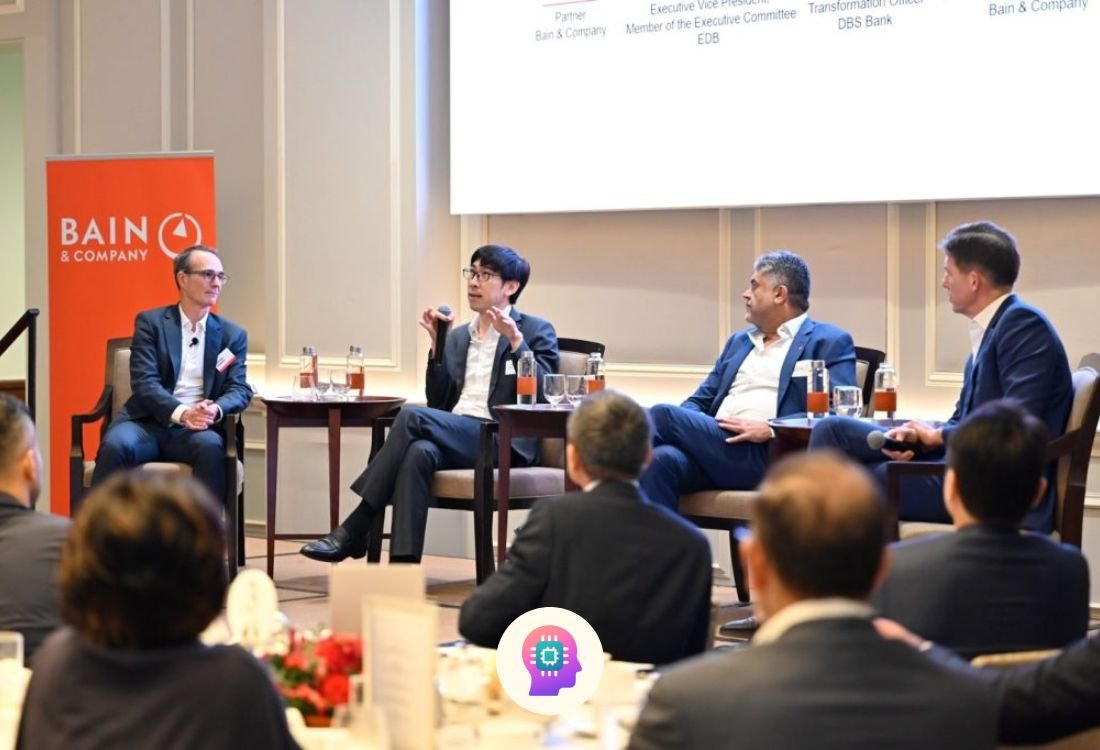
Bain & Company has released a new AI-focused guide aimed at CEOs across Southeast Asia, highlighting why many organisations in the region are struggling to move beyond early-stage AI experiments. The report explains that a large number of companies still view AI as a collection of tools or software upgrades, rather than as a fundamental shift in how businesses operate, compete, and grow revenue. According to Bain, this mindset is a key reason why AI initiatives remain stuck in pilot phases instead of delivering meaningful business impact.
Why AI Adoption Is More Complex in Southeast Asia
The guide points out that Southeast Asia presents unique challenges for AI adoption compared to more uniform markets. The region includes countries with very different cultures, income levels, consumer behaviours, and market sizes. Shopping patterns and customer expectations vary widely from one country to another, wages are still relatively low, and many businesses do not operate at a scale large enough to support long and expensive AI trials. Because of these factors, basic efficiency improvements through automation often fail to generate strong returns. Bain emphasises that real value comes when AI is used to rethink decision-making, redesign processes, increase capacity without expanding headcount, and open new revenue opportunities.
Economic Reality Limits Cost-Saving AI Models
Bain’s analysis shows that average wages in Southeast Asia are roughly 7% of those in the United States, which significantly reduces the financial impact of labour-related automation. The report also notes that only about 40% of the region’s total market value comes from large enterprises, compared to around 60% in India. With fewer large organisations capable of absorbing the upfront costs of AI adoption, leaders need to prioritise speed, scalability, and new operating models instead of focusing mainly on cost reduction. This shift in thinking is critical for achieving sustainable AI-driven growth in the region.
How Businesses Are Already Using AI Effectively
Despite the challenges, the guide highlights several examples where organisations are already seeing tangible benefits from AI by aligning initiatives with clear business goals. Some companies are using AI to shorten product development cycles, reduce supply chain disruptions, and improve time-to-market, which directly supports revenue growth. In manufacturing, predictive analytics is helping reduce machine downtime and improve overall output. In financial services, large language models are being applied to support compliance and regulatory processes, reducing manual workloads and improving accuracy. These examples show that AI delivers the strongest impact when it is tied to strategic priorities rather than isolated experiments.
Leadership Mindset Determines AI Impact
Bain senior partner Aadarsh Baijal explains that many leaders still approach AI as a technology rollout instead of a competitive redesign. He notes that the real breakthrough happens when leadership teams understand how AI can reshape demand, pricing strategies, operational models, and customer expectations. When executives start from this broader perspective, they are better positioned to decide where AI investments will generate measurable and lasting value.
The Role of Data, Culture, and People in AI Transformation
The guide strongly emphasises that successful AI transformation depends as much on people and organisational culture as it does on technology. Bain argues that many companies mistakenly believe scaling AI is primarily a hiring challenge, when in reality much of the necessary talent already exists within the organisation. The bigger challenge lies in breaking down silos, encouraging collaboration, and helping employees understand how AI fits into their daily work.
The “Lab” and the “Crowd” Model for Scaling AI
Bain describes two essential groups involved in effective AI transformation. The “Lab” consists of small, highly skilled technical teams responsible for rebuilding processes and developing the first versions of AI-driven systems. The “Crowd” includes the wider employee base, who need sufficient AI awareness and training to use these systems confidently in everyday operations. Without engagement from both groups, AI projects often fail to scale beyond pilot stages and lose momentum.
Why Existing Teams Matter More Than External Hires
Senior partner Mohan Jayaraman explains that the strongest results occur when existing teams lead AI initiatives. According to him, impact increases when organisations combine small expert groups with broad-based training, allowing new AI systems to become part of normal workflows rather than remaining isolated trials. This approach helps embed AI into the core of the business and ensures long-term adoption.
Fixing Data and Technology Foundations
The guide also highlights the importance of addressing long-standing issues related to data quality, governance, tracking, and integration with existing systems. Leaders must clearly define how AI initiatives connect with current technologies and business processes. Without this foundational work, early AI successes are difficult to replicate or scale across the organisation, limiting overall impact.
Bain’s AI Innovation Hub in Singapore
To support enterprises in moving beyond experimentation, Bain & Company is launching an AI Innovation Hub in Singapore with backing from the Singapore Economic Development Board. The hub is designed to help organisations build production-ready AI systems that can operate at scale. Its focus areas include advanced manufacturing, energy and resources, financial services, healthcare, and consumer goods.
Strengthening the Regional AI Ecosystem
The new hub becomes part of Singapore’s rapidly growing AI ecosystem, which includes more than a thousand startups and is projected to generate around S$198.3 billion in economic value from AI by 2030. The hub will work on real-world use cases such as predictive maintenance for factories, AI-driven support for regulatory compliance in finance, and personalisation technologies for retail. It will also help companies develop internal engineering capabilities so they can manage and scale AI programmes independently.
AI as a Strategic Shift, Not a Side Project
As competition intensifies across Southeast Asia, Bain’s guide makes it clear that companies treating AI as a fundamental shift in how they operate will be better positioned for long-term success. Organisations that move beyond pilots and align AI with strategy, people, and processes are more likely to turn experimentation into sustained business results, setting themselves apart in an increasingly AI-driven economy.